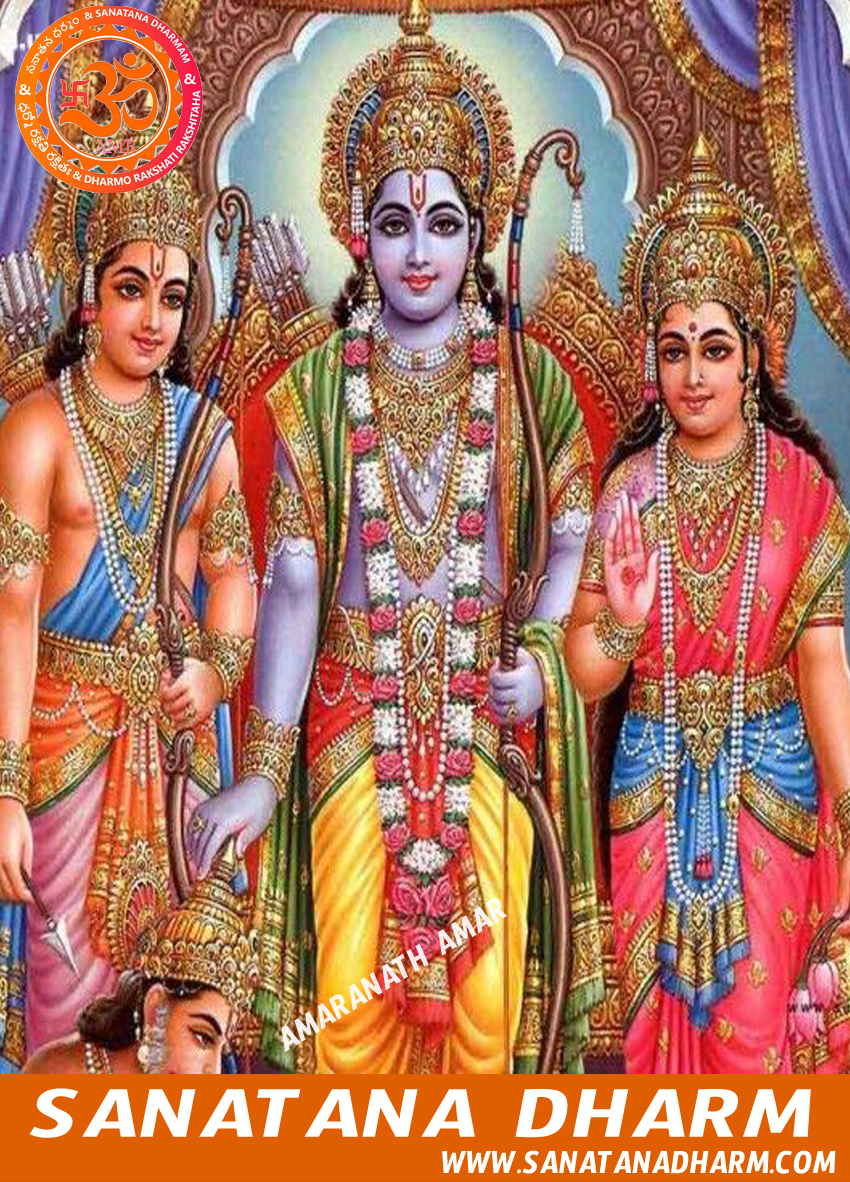
That night having given way to dawn, the illustrious Rama with a broad chest spoke (as follows) to Lakshmana, the son of Sumitra and who was endowed with auspicious signs :
रात के बीत जाने पर, विशाल वृक्षों के बीच, महान यश वाले राम ने शुभ लक्षणों वाले लक्ष्मण से कहा।
"Oh, tiger among men! Oh, Rama resembling a son of divinity! Here is the boat for you to cross the river, which flows into the sea. Oh, virtuous one! (Pray) get into it."
हे सुव्रत पुरुषश्रेष्ठ! तुम सागर जैसी विशाल नदी को पार करने के लिए इस नौका पर चढ़ो।
Having equipped themselves with a quiver each with arrows, fastening their swords and armed with their bows, Rama and Lakshmana, with Sita, proceeded towards the river of Ganga.
तब धनुषधारी राम और सीता ने अपने तरकश कसकर और तलवारें बाँधकर गंगा की ओर प्रस्थान किया।
Touching Sumantra with his auspicious right hand, Rama then said: "Oh, Sumantra! Return quickly to the king's presence and be attentive in serving him."
तब दशरथपुत्र राम ने अपने श्रेष्ठ दाहिने हाथ से सुमंत्र को स्पर्श करते हुए कहा, "सुमंत्र, शीघ्र ही राजा के पास लौट जाओ और सावधान रहना।"
"None in the world has had to suffer such a fate as yourself; that you should have to dwell in the forest with your brother and your consort as if you were an ordinary man!"
इस संसार में किसी भी पुरुष ने ऐसा कुछ नहीं किया है जो आपसे आगे निकल जाए। अपने भाई की पत्नी के साथ वन में आपका निवास सामान्य मनुष्यों जैसा है।
Ayodhya Kanda – Sarga 52 · v17
न मन्ये ब्रह्म चर्ये अस्ति स्वधीते वा फल उदयः |
मार्दव आर्जवयोः वा अपि त्वाम् चेद् व्यसनम् आगतम् || २-५२-१७
"I think that there is no reward in leading a life of religious student or in studying religious scriptures or even in cultivating tenderness and straight forwardness, when adversity has come to you."
ब्रह्मचर्य या स्वाध्याय से कोई फल नहीं मिलता, यदि तुममें कोमलता और सरलता न हो।
"Oh, heroic Rama! Living in the forest along with Sita and your brother, you will obtain the same position as one who has conquered the three worlds."
हे वीर, तुम सीता और लक्ष्मण के साथ वन में निवास करते हुए, तीनों लोकों को जीत लेने के समान ही गति प्राप्त करोगे।
Ayodhya Kanda – Sarga 52 · v19
वयम् खलु हता राम ये तया अपि उपवन्चिताः |
कैकेय्या वशम् एष्यामः पापाया दुह्ख भागिनः || २-५२-१९
"Oh, Rama! We are actually ruined, in that, disappointed in our hopes by you too, we shall fall under the sway of Kaikeyi the sinful woman and reap the suffering."
हम राम द्वारा ठगे गए हैं, और कैकेयी द्वारा भी धोखा खाए हैं। अब हम उस पापी के वश में होकर दुःख भोगेंगे।
Then, Rama again and again spoke these sweet words as follows to that charioteer, whose tears got dried up and who had sipped some water and got himself purified:
जब राम के आँसू रुक गए और उन्होंने शुद्ध जल से अपना मुख धो लिया, तब उन्होंने उस व्यक्ति से फिर से मधुर वाणी में बात की।
Ayodhya Kanda – Sarga 52 · v22
इक्ष्वाकूणाम् त्वया तुल्यम् सुहृदम् न उपलक्षये |
यथा दशरथो राजा माम् न शोचेत् तथा कुरु || २-५२-२२
"I do not see any one who is as great a friend of the Ikshvakus as you are. (Pray) act in such a way that king Dasaratha may not lament about me"
हे इक्ष्वाकु वंश के राजा, तुम्हारे समान मित्र मुझे कोई नहीं दिखता। तुम ऐसा करो कि राजा दशरथ मुझे इस प्रकार न सोचें कि मैं दुखी हूँ।
Ayodhya Kanda – Sarga 52 · v23
शोक उपहत चेताः च वृद्धः च जगती पतिः |
काम भार अवसन्नः च तस्मात् एतत् ब्रवीमि ते || २-५२-२३
"The king, his mind afflicted with grief, is aged as well. He is pressed down by a burden of passion. Hence, I tell you this."
दुःख से व्याकुल मन वाले, बूढ़े और संसार के स्वामी राजा, काम के बोझ से दबे हुए थे, इसलिए मैं तुमसे यह कहता हूँ।
Ayodhya Kanda – Sarga 52 · v24
यद् यद् आज्ञापयेत् किंचित् स महात्मा मही पतिः |
कैकेय्याः प्रिय काम अर्थम् कार्यम् तत् अविकान्क्षया || २-५२-२४
"What so ever act that high-soled emperor may enjoin you to do, with intent to oblige the desire of Kaikeyi, it is to be done unhesitatingly."
वह महात्मा राजा, कैकेयी की प्रिय इच्छा पूरी करने के लिए, जो भी आज्ञा देते, उसे बिना किसी संकोच के पूरा करते।
Ayodhya Kanda – Sarga 52 · v25
एतत् अर्थम् हि राज्यानि प्रशासति नर ईश्वराः |
यद् एषाम् सर्व कृत्येषु मनो न प्रतिहन्यते || २-५२-२५
"The kings indeed rule the states with this end in view that their will may not be frustrated in any undertaking."
यह श्लोक बताता है कि राजाओं को राज्य का शासन इसलिए करना चाहिए ताकि उनके मन में किसी भी कार्य को करने में कोई बाधा न आए। वे बिना किसी रुकावट के अपने कर्तव्यों का पालन कर सकें।
Ayodhya Kanda – Sarga 52 · v26
यद्यथा स महा राजो न अलीकम् अधिगच्चति |
न च ताम्यति दुह्खेन सुमन्त्र कुरु तत् तथा || २-५२-२६
"Oh, Sumantra! Carry out everything in such a way that the said emperor neither finds it unpleasing nor gets tormented by grief."
हे सुमंत्र, जैसे वह महान राजा कभी झूठ नहीं बोलता और न ही दुःख से व्याकुल होता है, तुम भी वैसा ही करो।
"Only after performing respectful salutation to the old and venerable king, who has never known suffering and who has subdued his senses, you tell these words to him on my behalf."
हे राजा, जो वृद्ध, श्रेष्ठ और जितेंद्रिय हैं, उन्हें मेरा प्रणाम कहकर यह संदेश दें।
Ayodhya Kanda – Sarga 52 · v28
न एव अहम् अनुशोचामि लक्ष्मणो न च मैथिली |
अयोध्यायाः च्युताः च इति वने वत्स्यामह इति वा (महेति!)|| २-५२-२८
"Indeed neither I nor Lakshmana and Sita grieve for having moved from Ayodhya or that we are going to dwell in a forest."
मैं न तो लक्ष्मण के लिए शोक करता हूँ और न ही मैथिली के लिए। यह सोचकर भी मुझे दुःख नहीं कि हम अयोध्या से निकाले गए हैं और वन में रहेंगे।
Ayodhya Kanda – Sarga 52 · v29
चतुर् दशसु वर्षेषु निवृत्तेषु पुनः पुनः |
लक्ष्मणम् माम् च सीताम् च द्रक्ष्यसि क्षिप्रम् आगतान् || २-५२-२९
"After completing fourteen years, you will once more see Lakshmana, myself and Sita too returned apace from the forest."
चौदह वर्ष बीत जाने पर, तुम शीघ्र ही लौटे हुए लक्ष्मण, मुझे और सीता को फिर से देखोगे।
Ayodhya Kanda – Sarga 52 · v30
एवम् उक्त्वा तु राजानम् मातरम् च सुमन्त्र मे |
अन्याः च देवीः सहिताः कैकेयीम् च पुनः पुनः || २-५२-३०
आरोग्यम् ब्रूहि कौसल्याम् अथ पाद अभिवन्दनम् |
सीताया मम च आर्यस्य वचनाल् लक्ष्मणस्य च || २-५२-३१
"Oh,Sumantra! This is what you should say to the king, my mother, all other queens and Kaikeyi. Tell Kausalya again and again that I am keeping good health. Thereafter, convey salutations at her feet on behalf of Sita as well as myself and Lakshmana the faithful man."
यह श्लोक राजा दशरथ, उनकी माता और अन्य रानियों को संबोधित करता है, जिसमें कैकेयी को बार-बार कौशल्या के स्वास्थ्य के बारे में पूछने और सीता, लक्ष्मण और स्वयं के अभिवादन को राजा तक पहुँचाने का निर्देश दिया गया है।
Ayodhya Kanda – Sarga 52 · v31
ब्रूयाः च हि महा राजम् भरतम् क्षिप्रम् आनय |
आगतः च अपि भरतः स्थाप्यो नृप मते पदे || २-५२-३२
"Tell our salutations to the emperor too. Bring Bharata quickly. After his arrival, Bharata may be installed in the position, as desired by the king."
हे महाराज, भरत को शीघ्र बुलाइए। भरत के आने पर, राजा की आज्ञा से उन्हें राजपद पर बिठाया जाएगा।
Ayodhya Kanda – Sarga 52 · v32
भरतम् च परिष्वज्य यौवराज्ये अभिषिच्य च |
अस्मत् सम्तापजम् दुह्खम् न त्वाम् अभिभविष्यति || २-५२-३३
"When you embrace Bharata and install him in the office of the Prince Regent, the agony caused by the repentance felt by you on our account will not overpower you."
भरत को गले लगाकर और युवराज्याभिषेक करके, तुम्हारा दुःख तुम्हें कभी भी नहीं सताएगा।
Ayodhya Kanda – Sarga 52 · v33
भरतः च अपि वक्तव्यो यथा राजनि वर्तसे |
तथा मातृषु वर्तेथाः सर्वास्व् एव अविशेषतः || २-५२-३४
"Bharata too is to be told thus: "Treat without distinction all your mothers with the same regard as you behave towards the king."
भरत, तुम राजा के प्रति जैसा व्यवहार करते हो, वैसा ही सभी माताओं के प्रति भी बिना किसी भेद-भाव के करना चाहिए।
Ayodhya Kanda – Sarga 52 · v34
यथा च तव कैकेयी सुमित्रा च अविशेषतः |
तथैव देवी कौसल्या मम माता विशेषतः || २-५२-३५
"As is your affection for Kaikeyi, so let it be for Sumitra and also the divine Kausalya, my mother"
जैसे कैकेयी और सुमित्रा मेरे लिए समान हैं, वैसे ही देवी कौशल्या मेरी माँ विशेष रूप से हैं।
"If you accept the princely kingdom with an intent to please our father, it will be possible for you to enhance happiness in both the worlds (in this world and the next)."
तातस्य प्रियकामेन यौवराज्यमपेक्षता । लोकयोरुभयोः शक्यम् त्वया यत्सुखमेधितुम् ॥ २-५२-३६ **सरल हिंदी अनुवाद:** पिता की इच्छा पूरी करने के लिए तुमने युवराज पद स्वीकार किया है। तुम्हारे द्वारा दोनों लोकों में सुख प्राप्त करना संभव है।
Sumantra, who was being sent back by Rama, was agonized with grief after hearing the whole of that discourse and affectionately spoke to Rama as follows:
राम द्वारा रोके जाने पर, सुमंत्र शोक से व्याकुल थे। काकुत्स्थ (राम) की सारी बातें सुनकर, उन्होंने स्नेहपूर्वक उनसे कहा।
"If I spoke to you fearlessly in a friendly tone without following courteousness, you ought to forgive my mode of expression, considering me as your devotee"
यदि मैं स्नेहवश बिना किसी संकोच के कहूँ, तो आप भक्तिमान् समझकर उस बात को क्षमा करने योग्य हैं।
Ayodhya Kanda – Sarga 52 · v38
कथम् हि त्वद् विहीनो अहम् प्रतियास्यामि ताम् पुरीम् |
तव तात वियोगेन पुत्र शोक आकुलाम् इव || २-५२-३९
"How indeed can I return without you to that city, which through separation from you, has been reduced to the state of a mother stricken with grief due to separation from her son"
हे पिता, आपके बिना मैं उस नगरी में कैसे जाऊँगा? वह तो आपके वियोग से पुत्र के शोक से व्याकुल स्त्री के समान होगी।
"By seeing my chariot on that day even with Rama in it, the people were lamenting so much. Now, if they see the chariot without Rama the city of Ayodhya will even be broken asunder."
जब लोगों ने रथ को सर (तीर) से भरा देखा, तो वे राम के बिना उस रथ को देखकर व्याकुल हो जाते, मानो पूरा नगर ही विदीर्ण हो जाए।
"The city will be plunged in misery, like an army in which its commander is lost in a combat with the charioteer alone surviving, on seeing this chariot without you."
यह श्लोक कहता है कि जब नगर ने इस रथ को खाली और अपने वीर योद्धाओं से रहित देखा, तो वह अत्यंत दीन हो गया, जैसे युद्ध में पराजित सेना हो।
"Thinking of you, who though residing far away are established foremost in their minds, the people of Ayodhya must have been deprived of their food today."
दूर रहने पर भी, मन में तुम्हें सामने उपस्थित जानकर, आज प्रजाएँ निश्चित रूप से तुम्हें सोचते-सोचते निराहार हो गई हैं। यह तुम्हारी अनुपस्थिति से उत्पन्न उनकी व्यथा को दर्शाता है।
"The great perplexity that ensued, on the occasion of your exile, among the people (of Ayodhya), whose minds were depressed through grief on your account, was witnessed by you indeed, Oh, Rama!"
हे राम! आपके वनवास काल में प्रजाएँ आपके वियोग से व्याकुल थीं, यह आपने स्वयं देखा था। उस समय उनका जीवन अत्यंत कष्टमय हो गया था।
"Oh, the faultless Rama! For this reason, I cannot go back to Ayodhya. (Pray) permit me to accompany you to the forest."
हे निष्पाप! तुम्हारे बिना मैं अयोध्या नहीं जा सकता।
वनवास के लिए मुझे आज्ञा देना तुम्हारा कर्तव्य है।
Ayodhya Kanda – Sarga 52 · v48
यदि मे याचमानस्य त्यागम् एव करिष्यसि | सरथो अग्निम् प्रवेक्ष्यामि त्यक्त मात्रैह त्वया || २-५२-४९
"If you leave me even though I solicit you to take me with you, I shall enter a fire with chariot and all, here itself the moment I am forsaken by you"
"The pleasure of driving your chariot has been obtained by me because of you and it is through you that I seek the happiness that comes in dwelling in a forest."
मैंने तुम्हारे लिए जो किया, उससे मुझे रथ पर यात्रा का सुख मिला। मैं आशा करता हूँ कि तुम्हारे लिए वनवास करने से तुम्हें भी सुख मिलेगा।
Ayodhya Kanda – Sarga 52 · v51
प्रसीद इच्चामि ते अरण्ये भवितुम् प्रत्यनन्तरः |
प्रीत्या अभिहितम् इच्चामि भव मे पत्यनन्तरः || २-५२-५२
"Be graceful. I desire to become your close associate in the forest. I wish to hear your loving assent with the words �be my close associate!"
हे प्रिय, मैं चाहता हूँ कि तुम मेरे वन में मेरे पीछे-पीछे आओ। मैं चाहता हूँ कि तुम प्रेम से कहो, "मेरे पति बनो।"
Ayodhya Kanda – Sarga 52 · v52
इमे चापि हया वीर यदि ते वनवासिनः |
परिचर्याम् करिष्यन्ति प्राप्स्यन्ति परमाम् गतिम् || २-५२-५३
"Oh, hero! If these horses too can render service to you, they can attain a supreme abode."
ये घोड़े, हे वीर, यदि वनवासियों की सेवा करेंगे, तो वे परम गति को प्राप्त होंगे।
Ayodhya Kanda – Sarga 52 · v53
तव शुश्रूषणम् मूर्ध्ना करिष्यामि वने वसन् |
अयोध्याम् देव लोकम् वा सर्वथा प्रजहाम्य् अहम् || २-५२-५४
-"By all means, I am leaving for good, Ayodhya or even heaven. Dwelling in the forest, with my head bent low, I shall render service to you."
मैं वन में रहकर आपकी सेवा अपने सिर पर धारण करूँगा। मैं अयोध्या को और देवलोक को भी हर प्रकार से त्याग दूँगा।
Ayodhya Kanda – Sarga 52 · v54
न हि शक्या प्रवेष्टुम् सा मया अयोध्या त्वया विना |
राज धानी महा इन्द्रस्य यथा दुष्कृत कर्मणा || २-५२-५५
"As a doer of wicked deeds cannot enter Amaravati, the capital of Devendra, so also I cannot enter Ayodhya without you."
हे प्रिय, तुम्हारे बिना मैं उस अयोध्या में प्रवेश नहीं कर सकता, जैसे महा इन्द्र भी दुष्कर्म करने वाले को अपने राज्य में प्रवेश नहीं देते।
Ayodhya Kanda – Sarga 52 · v55
वन वासे क्षयम् प्राप्ते मम एष हि मनो रथः |
यद् अनेन रथेन एव त्वाम् वहेयम् पुरीम् पुनः || २-५२-५६
"This is indeed my desire that after reaching the end of your exile, I may take you back to the city of Ayodhya in this very chariot."
वनवास समाप्त होने पर मेरी यही इच्छा है कि मैं इसी रथ से आपको पुनः अयोध्या ले चलूँ।
Ayodhya Kanda – Sarga 52 · v56
चतुर् दश हि वर्षाणि सहितस्य त्वया वने |
क्षण भूतानि यास्यन्ति शतशः तु ततः अन्यथा || २-५२-५७
"So long as I am with you together in the forest, fourteen years will slip away momentarily. Otherwise than this, they will multiply a hundred- fold."
वन में तुम्हारे साथ चौदह वर्ष ऐसे बीत जाएंगे जैसे एक क्षण। यदि तुम अकेले होते तो यही समय सौ वर्ष के समान लगता।
Ayodhya Kanda – Sarga 52 · v57
भृत्य वत्सल तिष्ठन्तम् भर्तृ पुत्र गते पथि |
भक्तम् भृत्यम् स्थितम् स्थित्याम् त्वम् न माम् हातुम् अर्हसि || २-५२-५८
"Oh, prince, who are so fond of your dependents! You ought not abandon me, your devoted servant, established in the path followed by the son of his master and (always)keeping within bounds."
हे स्वामी, जो अपने सेवकों पर पुत्रवत स्नेह करते हैं और अपने सेवकों के साथ यात्रा करते हैं, ऐसे स्वामी को अपने सेवक को छोड़ना उचित नहीं है।
Ayodhya Kanda – Sarga 52 · v58
एवम् बहु विधम् दीनम् याचमानम् पुनः पुनः |
रामः भृत्य अनुकम्पी तु सुमन्त्रम् इदम् अब्रवीत् || २-५२-५९
Rama, who was compassionate towards his dependents, spoke as follows to Sumantra, who was miserably entreating him again and again in many modes.
इस प्रकार बार-बार दीन भाव से याचना करते हुए देखकर, स्वामीभक्त राम ने सुमन्त्र से यह कहा।
Ayodhya Kanda – Sarga 52 · v59
जानामि परमाम् भक्तिम् मयि ते भर्तृ वत्सल |
शृणु च अपि यद् अर्थम् त्वाम् प्रेषयामि पुरीम् इतः || २-५२-६०
"Oh, charioteer so fond of your master! I know your excellent devotion to me. Hear wherefore I send you from here to the city of Ayodhya."
हे स्वामीभक्त प्रियतमे, मैं तुम्हारे हृदय में मेरे प्रति अगाध भक्ति को जानता हूँ। मैं तुम्हें यहाँ से उस नगर में क्यों भेज रहा हूँ, यह भी सुनो।
"Seeing you, returning to Ayodhya, Kaikeyi, my younger mother will get the proof that Rama has gone to the forest."
अपनी छोटी माँ कैकेयी को मुझे नगर में गया देखकर विश्वास हो जाएगा, ऐसा सोचकर ही राम वन को गए।
Ayodhya Kanda – Sarga 52 · v61
परितुष्टा हि सा देवि वन वासम् गते मयि |
राजानम् न अतिशन्केत मिथ्या वादी इति धार्मिकम् || २-५२-६२
"Having completely satisfied, about me having gone to forest, Kaikeyi will leave her strong suspicion that the virtuous king may be a person who speaks untruth."
जब मैं वन में चला गया, तब वह देवी बहुत प्रसन्न हुई। उसने उस धार्मिक राजा पर झूठा आरोप लगाने का कोई भय नहीं किया।
Ayodhya Kanda – Sarga 52 · v62
एष मे प्रथमः कल्पो यद् अम्बा मे यवीयसी |
भरत आरक्षितम् स्फीतम् पुत्र राज्यम् अवाप्नुयात् || २-५२-६३
"This is my first priority that my younger mother should get the extensive kingdom, protected by Bharata and thus ruled by her own son."
यह मेरा पहला विचार है कि मेरी छोटी बहन, भरत द्वारा सुरक्षित, समृद्ध पुत्र राज्य को प्राप्त करे।
Ayodhya Kanda – Sarga 52 · v63
मम प्रिय अर्थम् राज्ञः च सरथः त्वम् पुरीम् व्रज |
संदिष्टः च असि या अनर्थांस् तांस् तान् ब्रूयाः तथा तथा || २-५२-६४
"For my pleasure and pleasure of the king, you go along with the chariot to Ayodhya and inform all the matters that you have been asked to tell each in the way you have been asked to do."
मेरे प्रिय मित्र, तुम राजा के साथ उस नगर को जाओ। तुम्हें जो भी अनर्थ दिखाई दें, उन्हें राजा को विस्तार से बताना।
Ayodhya Kanda – Sarga 52 · v64
इति उक्त्वा वचनम् सूतम् सान्त्वयित्वा पुनः पुनः |
गुहम् वचनम् अक्लीबम् रामः हेतुमद् अब्रवीत् || २-५२-६५
Having spoken thus to the charioteer, the courageous Rama consoled him again and again. Then, he spoke the following reasoned words to Guha:
यह कहकर, सूत को बार-बार सांत्वना देकर, राम ने गुह को तर्कसंगत और दृढ़तापूर्वक वचन कहे।
"Oh, Guha! This stay in the inhabited woods is not proper for me. My stay should definitely be in a hermitage. Let an action diverted towards that aim be taken"
यह वन में रहने का समय नहीं है, क्योंकि आश्रम में रहना ही उचित है।
"I as such, wishing well of my father, Sita as well as Lakshmana and having taken up a discipline to be followed by ascetics, want to proceed further, wearing matted hair. Please bring the latex of a banyan tree."
वह मैं, पिता के हित की कामना से, सीता और लक्ष्मण के साथ, तपस्वियों के आभूषण स्वरूप इस नियम को धारण कर, जटाएँ धारण करके जाऊंगा। बरगद का दूध लाओ।
Rama, tiger among men who possessed long arms wore the distinguished mark of an ascetic (in the shape of matted hair) . Then, Rama and Lakshmana the brothers clad in the bark of trees and wearing a round mass of matted locks (on their head) looked bright like two ascetic sages.
यहाँ संस्कृत श्लोक का सरल हिंदी अनुवाद दिया गया है: लंबे हाथों वाले नरश्रेष्ठ व्याघ्र के समान पराक्रमी भरत ने जटाओं को धारण किया। तब वे दोनों, चीर वस्त्र धारण किए हुए और जटाओं के समूह को धारण किए हुए, भाई राम और लक्ष्मण ऋषियों के समान शोभायमान हुए।
Having adopted the way of a hermit (temporarily) along with Lakshmana, Rama then accepted the vow of an ascetic life and spoke to Guha, his friend as follows:
तब राम ने वैखानस मार्ग को अपनाकर, लक्ष्मण के साथ, गुह को सहायक के रूप में बुलाकर, व्रत का पालन करने का आदेश दिया।
Ayodhya Kanda – Sarga 52 · v70
अप्रमत्तः बले कोशे दुर्गे जन पदे तथा |
भवेथा गुह राज्यम् हि दुरारक्षतमम् मतम् || २-५२-७२
"Oh, Guha! Remain vigilant in defense, finance, internal security and public relations, for a kingdom is the most difficult one to be protected!"
यह श्लोक कहता है कि सेना, धन, दुर्ग और राज्य में हमेशा सतर्क रहना चाहिए, क्योंकि इन स्थानों की रक्षा करना अत्यंत कठिन होता है।
Then Rama, who was a delight to Ikshvaku dynasty, bade farewell to Guha and departed quickly, remaining undistracted, along with his consort and together with Lakshmana.
इक्ष्वाकु के पुत्र राम ने गुह को आज्ञा देकर, अपनी पत्नी सीता और लक्ष्मण के साथ शीघ्रता से आगे प्रस्थान किया। वे बिल्कुल भी विचलित नहीं हुए।
Ayodhya Kanda – Sarga 52 · v72
स तु दृष्ट्वा नदी तीरे नावम् इक्ष्वाकु नन्दनः |
तितीर्षुः शीघ्रगाम् गन्गाम् इदम् लक्ष्मणम् अब्रवीत् || २-५२-७४
Seeing the boat on the bank of the river and keen to cross the swift- flowing Ganga, Rama spoke to Lakshmana as follows: -
इक्ष्वाकु वंश के राजकुमार राम ने नदी के किनारे नाव देखकर, गंगा पार करने की इच्छा से लक्ष्मण से यह कहा।
Ayodhya Kanda – Sarga 52 · v73
आरोह त्वम् नर व्याघ्र स्थिताम् नावम् इमाम् शनैः |
सीताम् च आरोपय अन्वक्षम् परिगृह्य मनस्विनीम् || २-५२-७५
"Oh, Lakshmana the tiger among men! You get into the boat stationed here unhurriedly afterwards, having helped Sita the virtuous wife step into it."
हे नर व्याघ्र, इस स्थिर नाव पर धीरे-धीरे चढ़ो। और मनस्विनी सीता को पकड़कर, पीछे-पीछे चढ़ाओ।
Hearing the command completely of his elder brother, the prudent Lakshmana, by not counteracting it, made Sita to ascend the boat first and stepped into it afterwards.
वह भाई की आज्ञा सुनकर, बिना कोई विरोध किए, पहले सीता को साथ लेकर, फिर वह आत्मवान् (धैर्यवान्) चढ़ गया।
After ascending the boat, Rama too of mighty splendor then recited a sacred text (daiviim naavam etc) fit for brahmanas and Kshatriyas alike and conducive to his own good.
यहाँ श्लोक का सरल हिंदी अनुवाद दिया गया है: महा तेजस्वी राघव ने उस नाव पर चढ़कर, अपने कल्याण के लिए, ब्राह्मण और क्षत्रिय दोनों के समान मंत्रों का जाप किया।
Ayodhya Kanda – Sarga 52 · v77
आचम्य च यथाशास्त्रम् नदीम् ताम् सह सीतया |
प्राणमत्प्रीतिसम्हृष्टो लक्ष्मणश्चामितप्रभः || २-५२-७९
Having sipped water as per scriptures and with extreme delight, Rama with Sita made obeisance to that river. Lakshmana, of infinite splendor, followed suit.
सीता के साथ उस नदी में शास्त्र विधि के अनुसार आचमन करके, अमित कांति वाले लक्ष्मण अत्यंत प्रसन्न हुए।
Coming to the middle of Bhagirathi river, the irreproachable Sita with joined palms, spoke as follows to the said river: -
भागीरथी नदी के मध्य भाग में पहुँचकर, निंदारहित वैदेही (सीता) हाथ जोड़कर उस नदी से यह बोलीं।
Ayodhya Kanda – Sarga 52 · v81
पुत्रः दशरथस्य अयम् महा राजस्य धीमतः |
निदेशम् पालयतु एनम् गन्गे त्वद् अभिरक्षितः || २-५२-८३ चतुर् दश हि वर्षाणि समग्राणि उष्य कानने | भ्रात्रा सह मया चैव पुनः प्रत्यागमिष्यति || २-५२-८४ ततः त्वाम् देवि सुभगे क्षेमेण पुनर् आगता | यक्ष्ये प्रमुदिता गन्गे सर्व काम समृद्धये || २-५२-८५
"Oh, Ganga! Let Rama, the son of the emperor Dasaratha honor his father's command under your protection! Having dwelled in the forest in full fourteen years, may he return once more to your bank with his brother, Lakshmana and myself! Oh, blessed goddess Ganga! Returning safely, with all my desires fulfilled, I shall worship you with great joy."
यह दशरथ पुत्र, महापराक्रमी राजा का है। हे गंगे, तुम्हारी रक्षा में रहकर यह तुम्हारे आदेश का पालन करे। चौदह वर्ष पूरे वन में भाई और मेरे साथ रहकर, फिर लौट आएगा। तब हे देवी, मैं प्रसन्न होकर तुम्हारी पूजा करूँगा, हे सुभागी गंगे, सब कामनाओं की पूर्ति के लिए।
Ayodhya Kanda – Sarga 52 · v82
त्वम् हि त्रिपथगा देवि ब्रह्म लोकम् समीक्षसे |
भार्या च उदधि राजस्य लोके अस्मिन् सम्प्रदृश्यसे || २-५२-८६
You, Oh goddess flowing through three regions (namely heaven, earth and subterranean regions), include in your basin the realm of Brahma (the outermost of the six spheres enveloping the earth) and are vividly seen on this terrestrial plane as a consort of the ocean king."
हे देवी, तुम ही त्रिपथगा (गंगा) हो, जो ब्रह्मलोक को देखती हो। इस लोक में तुम समुद्रराज की पत्नी के रूप में भी दिखाई देती हो।
Ayodhya Kanda – Sarga 52 · v83
सा त्वाम् देवि नमस्यामि प्रशंसामि च शोभने |
प्राप्त राज्ये नर व्याघ्र शिवेन पुनर् आगते || २-५२-८७
गवाम् शत सहस्राणि वस्त्राणि अन्नम् च पेशलम् |
ब्राह्मणेभ्यः प्रदास्यामि तव प्रिय चिकीर्षया || २-५२-८८
"Oh, charming goddess! I, Sita, greet you and extol you too. When Rama the tiger among men safely returns and regains his kingdom, I shall give away a lakh of cows, soft clothing and food to brahmanas with intent to please you."
हे देवी, शोभायमान, मैं तुम्हें नमस्कार करता हूँ और तुम्हारी प्रशंसा करता हूँ। नर व्याघ्र शिव के पुनः आने पर, मैं तुम्हारी प्रसन्नता के लिए ब्राह्मणों को हजार गायें, वस्त्र और उत्तम अन्न दान करूँगा।
Ayodhya Kanda – Sarga 52 · v84
सुराघटसहस्रेण मांसभूतोदनेन च |
यक्ष्ये त्वाम् प्रयता देवि पुरीम् पुनरुपागता || २-५२-८९
"Oh, goddess! After reaching back the city of Ayodhya, I shall worship you with thousand pots of spirituous liquor and jellied meat with cooked rice well prepared for the solemn rite."
हे देवी, मैं तुम्हें प्रसन्न करने के लिए हजारों सुरा पात्रों और मांस-युक्त भोजन से पूजा करूँगा, जब मैं अपने नगर को लौट आऊँगा।
Ayodhya Kanda – Sarga 52 · v85
यानि त्वत्तीरवासीनि दैवतानि च सन्ति हि |
तानि सर्वाणि यक्ष्यामि तीर्थान्यायतनानि च || २-५२-९०
"I shall worship all deities dwelling on your banks as also sacred spots and sanctuaries."
जो भी तुम्हारे तट पर रहने वाले देवता हैं, उन सभी को मैं पूजूँगा, और तीर्थों तथा मंदिरों का भी पूजन करूँगा।
Ayodhya Kanda – Sarga 52 · v86
पुनरेव महाबाउर्मया भ्रात्रा च सम्गतः |
अयोध्याम् वनवासात्तु प्रविशत्वनघोऽनघे || २-५२-९१
"Oh, irreproachable goddess! May the sinless Rama (with mighty arms) re-enter Ayodhya again from the forest, along with Lakshmana and myself."
हे महाबाहु, मेरे भाई के साथ तुम फिर से मिल गए हो। अब तुम अयोध्या में प्रवेश करो, हे निष्पाप!
Then, Rama the mighty armed, spoke to Lakshmana (who heightened the joy of Sumitra) as follows:
यहाँ संस्कृत श्लोक का सरल हिंदी अनुवाद दिया गया है: तब महाबाहु (लक्ष्मण) ने सुमित्रानंदन (हनुमान) का आनंद बढ़ाया और कहा, "सज्जन हो या दुर्जन, तुम सबके रक्षण के लिए हो।"
"Security is an inevitable need in a forest, which has unforeseen dangers and is uninhabited, Oh, Lakshmana! Go in front. Let Sita follow you."
अवश्य ही रक्षा करनी चाहिए, विशेषकर सुनसान जंगल में। हे सौमित्र, तुम आगे चलो और सीता तुम्हारा अनुसरण करेंगी।
Ayodhya Kanda – Sarga 52 · v91
पृष्ठतः अहम् गमिष्यामि त्वाम् च सीताम् च पालयन् |
अन्योन्यस्य हि नो रक्षा कर्तव्या पुरुषर्षभ || २-५२-९६
"I shall proceed in the rear, protecting you and Sita. Oh, jewel among men! We must accord protection here to one another."
मैं पीछे से तुम्हारी और सीता की रक्षा करता हुआ चलूँगा। हे पुरुषश्रेष्ठ, हम दोनों को एक-दूसरे की रक्षा करनी चाहिए।
Ayodhya Kanda – Sarga 52 · v92
न हि तावदतिक्रान्ता सुकरा काचन क्रिया |
अद्य दुःखम् तु वैदेही वनवासस्य वेत्स्यति || २-५२-९७
"An act which has gone out of hand, whatsoever, cannot indeed be remedied again. Sita will experience the hardship of staying in a forest only from now."
यह श्लोक कहता है कि अभी तक कोई भी कार्य इतना कठिन नहीं हुआ है कि उसे पार न किया जा सके। लेकिन आज वैदेही (सीता) वनवास के दुःख को जानेगी।
Ayodhya Kanda – Sarga 52 · v93
प्रणष्टजनसम्बाधम् क्षेत्रारामविवर्बितम् |
विषमम् च प्रपातम् च वनमद्य प्रवेक्ष्यति || २-५२-९८
"Today she will enter the forest, where density of people is not seen, which is utterly devoid of fields and gardens, has a rugged surface and is full of stumbles."
वन अब सुनसान हो गया है, जहाँ लोगों की भीड़ नहीं है और न ही कोई बाग-बगीचा है। यह वन अब भयानक और दुर्गम हो गया है।
Ayodhya Kanda – Sarga 52 · v94
श्रुत्वा रामस्य वचनम् प्रतिस्थे लक्ष्मणोऽग्रतः |
अनन्तरम् च सीताया राघवो रघुनन्दनः || २-५२-९९
Listening to Rama's words, Lakshmana walked in front. Immediately after Sita, Rama, the delight of Raghu dynasty, advanced.
राम के वचन सुनकर लक्ष्मण आगे बढ़े। उसके बाद रघुवंशियों में श्रेष्ठ राम और सीता भी उनके पीछे चले।
Constantly gazing at Rama, who reached soon the other bank of Ganga River, the distressed Sumantra, his vision having failed due to the long distance and perturbed as he was, shed tears (of grief over separation from Rama).
गंगा के पार पहुँचकर, सुमन्त्र ने बार-बार राम को देखा। मार्ग की अधिकता से दृष्टि हटाकर, व्यथित तपस्वी (सुमन्त्र) ने आँसू बहाए।
Ayodhya Kanda – Sarga 52 · v96
स लोकपालप्रतिमप्रभाववाम् |
स्तीर्त्वा महात्मा वरदो महानदीम् |
ततः समृद्धान् शुभसस्यमालिनः |
क्रमेण वत्सान् मुदितानुपागमत् || २-५२-१०१
Having crossed the great river, Rama the high-soled, the bestowal of boons, equal in glory with the guardians of spheres, then reached progressively the prosperous and the happy land of Vatsa; which contained rows of beautiful crops.
वह लोकपालों के समान प्रभाव वाले, वरदान देने वाले महात्मा ने महानदी को पार किया। फिर, प्रसन्नचित्त होकर, उन्होंने क्रमशः समृद्ध और हरे-भरे खेतों वाले वत्सों (देशों) में प्रवेश किया।
Having hunted there four deer, namely Varaaha, Rishya, Prisata; and Mahaaruru (the four principal species of deer) and taking quickly the portions that were pure, being hungry as they were, Rama and Lakshmana reached a tree to take rest in the evening.
वे दोनों वहाँ चार बड़े मृगों - सूअर, बारहसिंगा, चित्तीदार हिरण और बड़ा रूरा हिरण - को मारकर, भूख लगने पर, पवित्र मांस लेकर शीघ्रता से रहने के लिए वन के स्वामी के पास गए।